
‘Haven’t you heard? The Blue Bird of Happiness?’ These were among the last words Lee Wen shared with me. Known to many as the Yellow Man, Lee Wen’s performance art practice questioned identity, the social and political conditions that shape our lives. Yet, it was this simple question that stayed with me.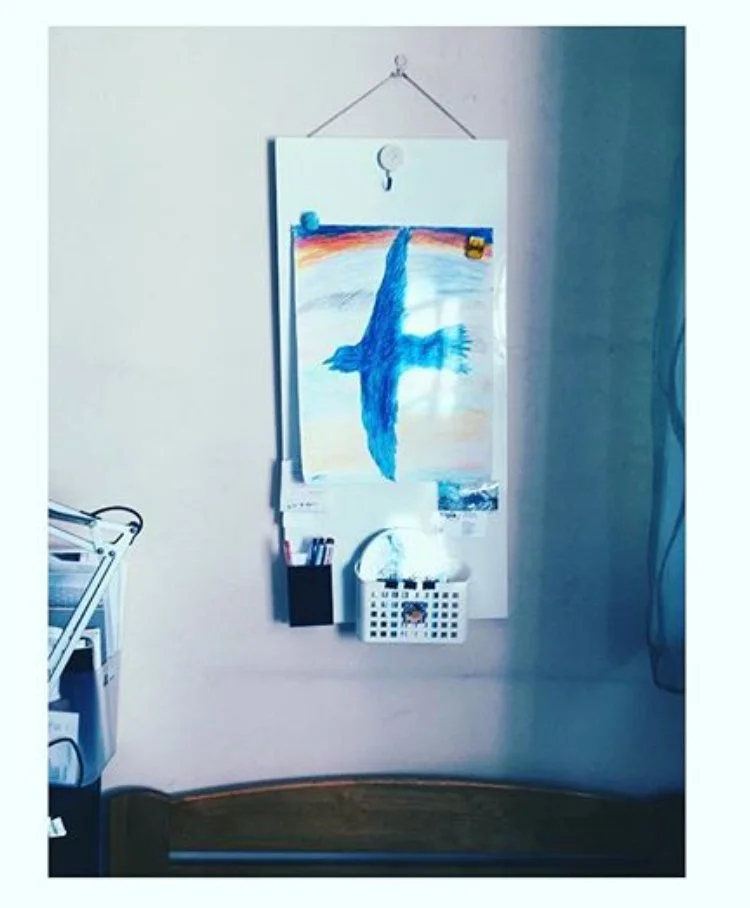
Lee Wen’s drawing in his bedroom, sometime in 2019?
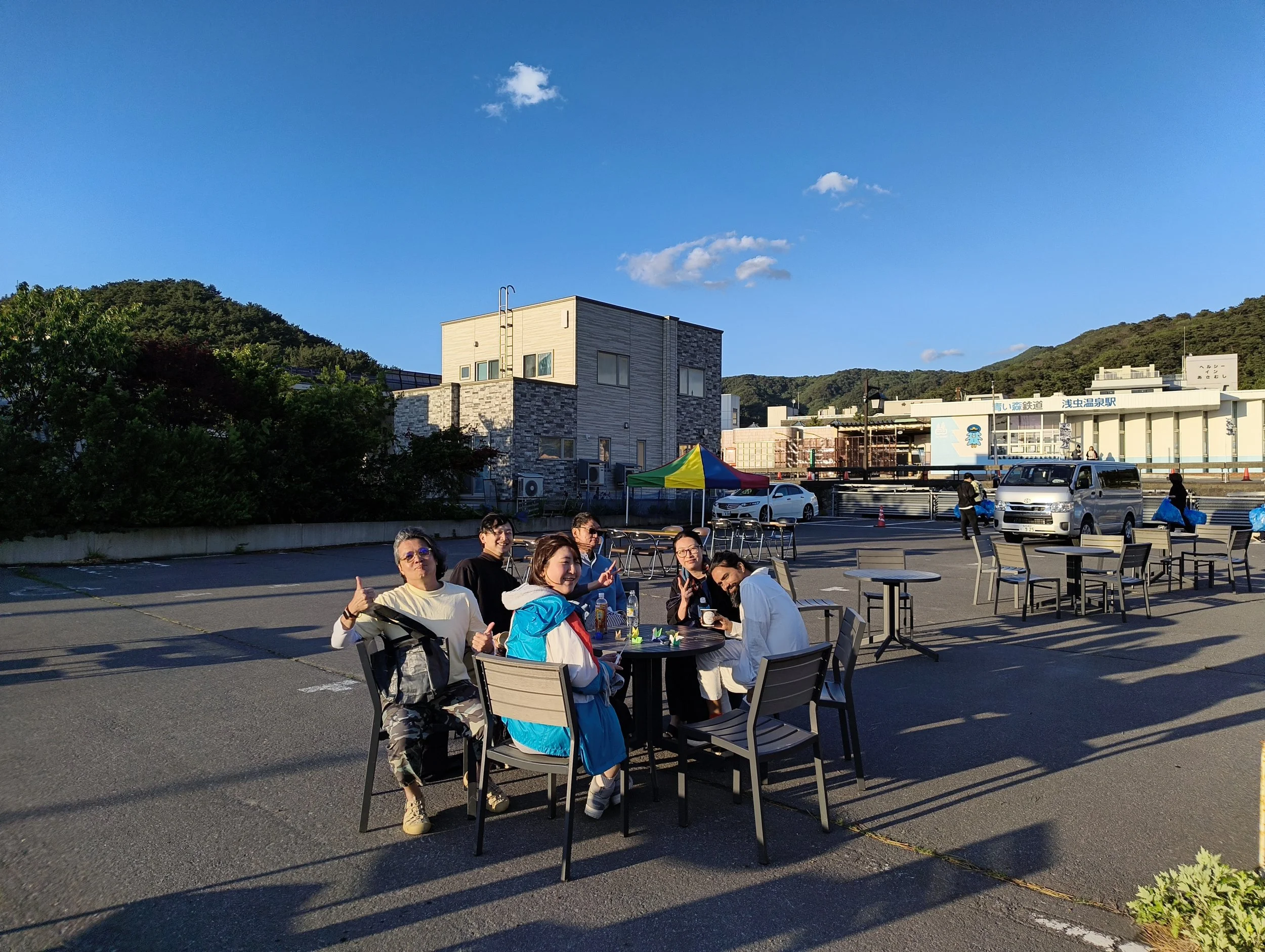
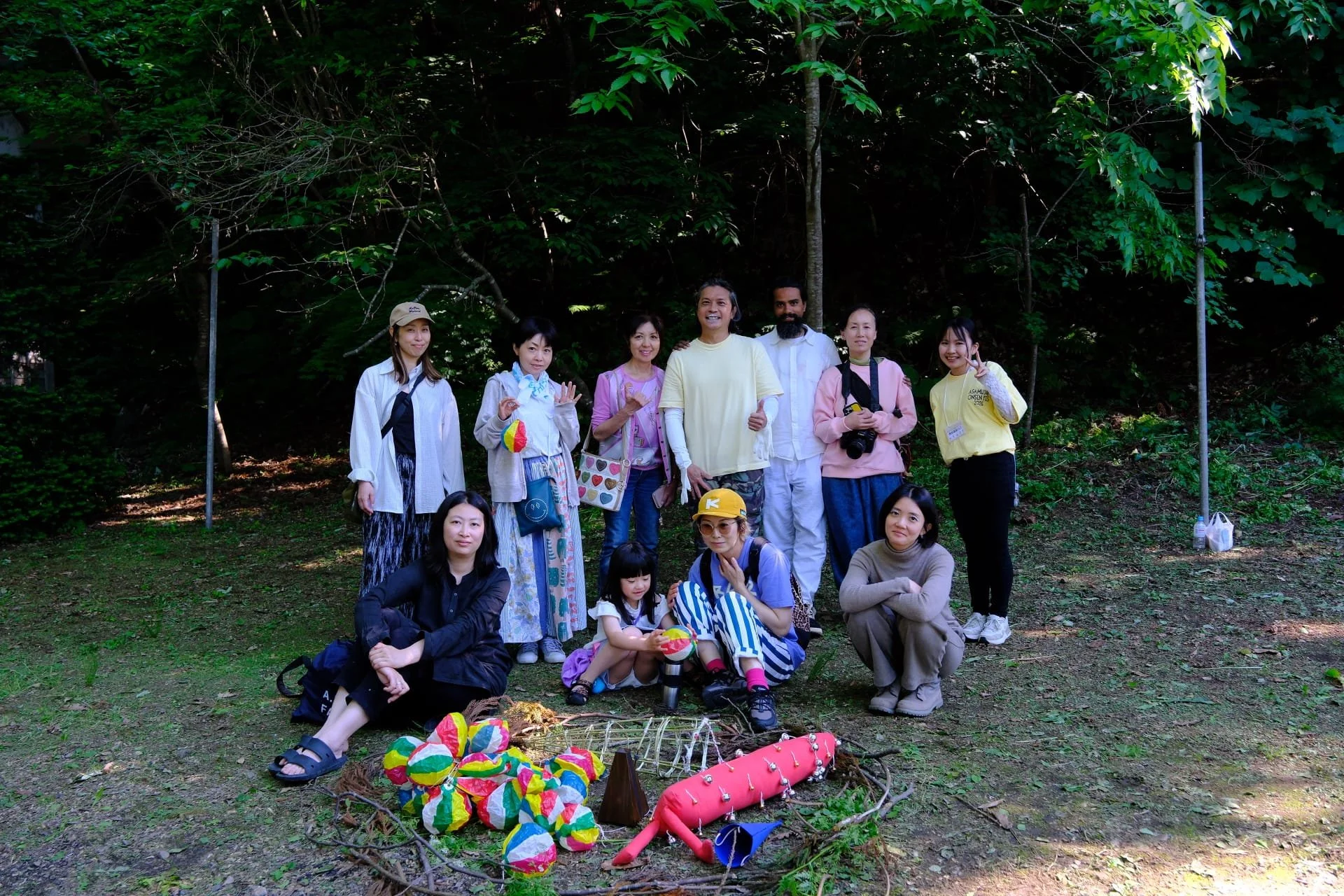
His words became the point of departure for my debut performance work at Asamushi, Aomori. The blue-and-white flycatcher (ōruri) is a common sight in northern Japan, heralding Summer and is often associated with happiness. Organised by Zentai performance artist, Yuzuru Maeda, the second edition of Asamushi Super Arts brought together artists Justin Lee, B. Ajay Sharma, Park Jihyoung and myself for a weekend of performance art. 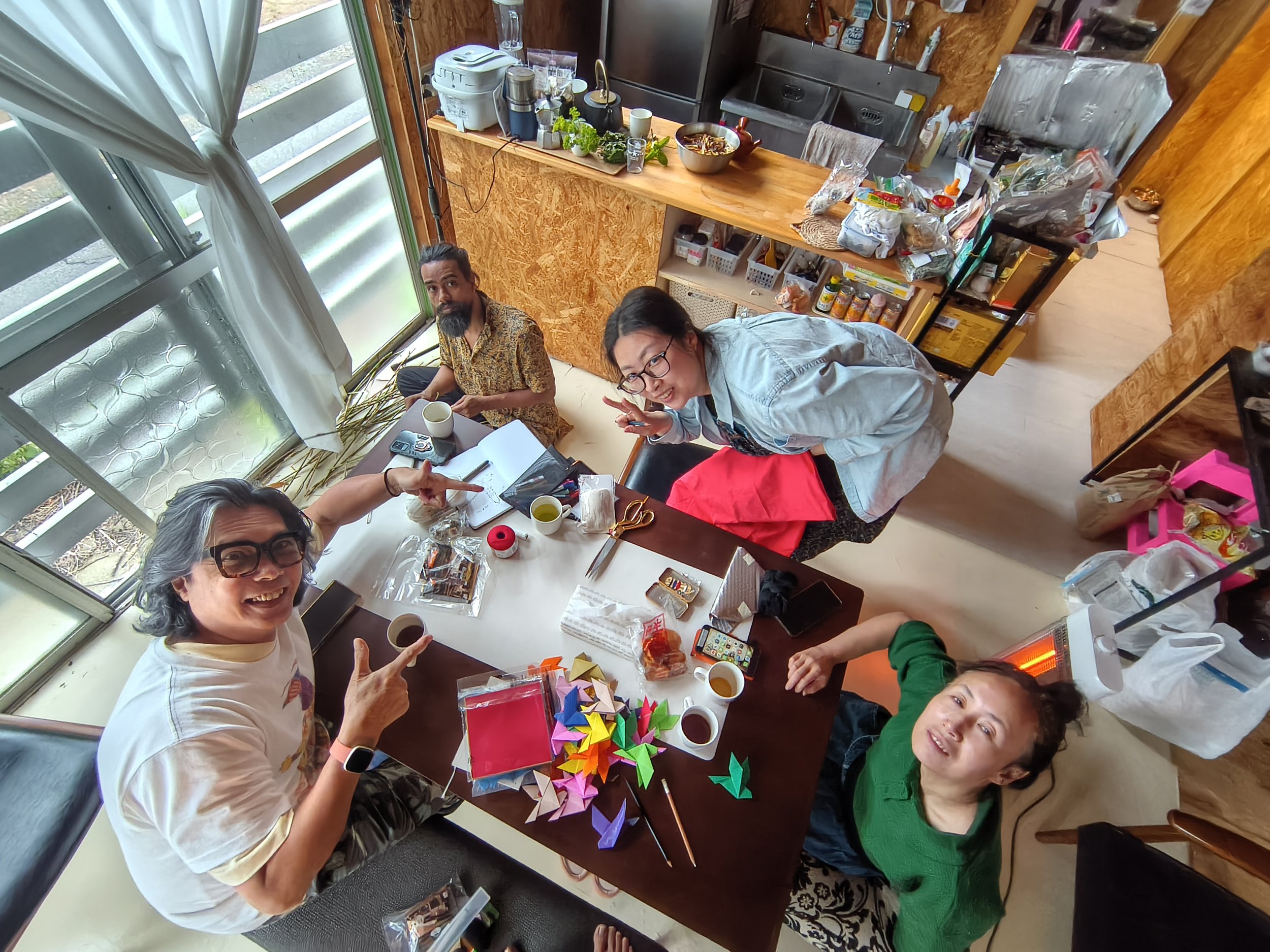
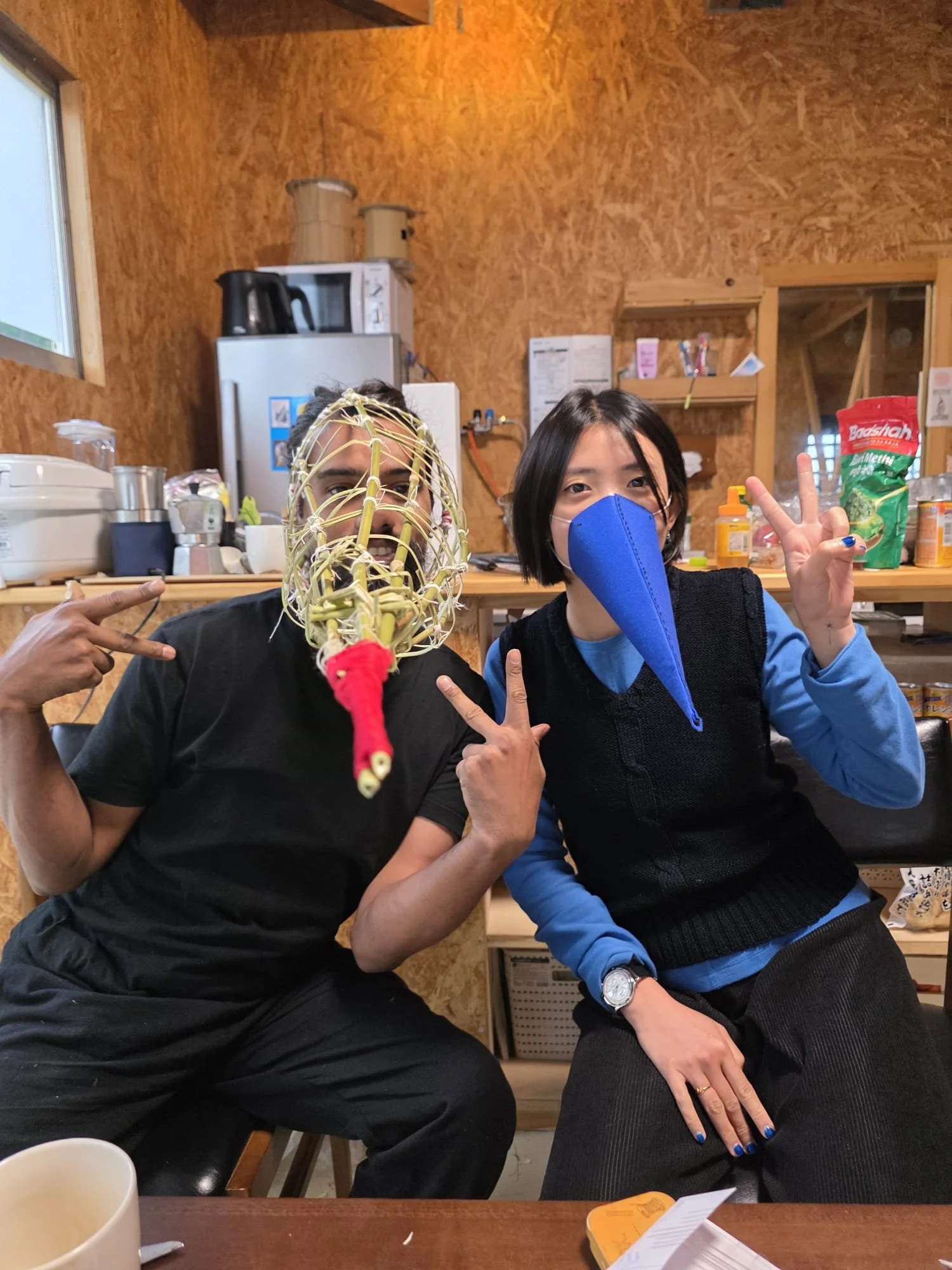
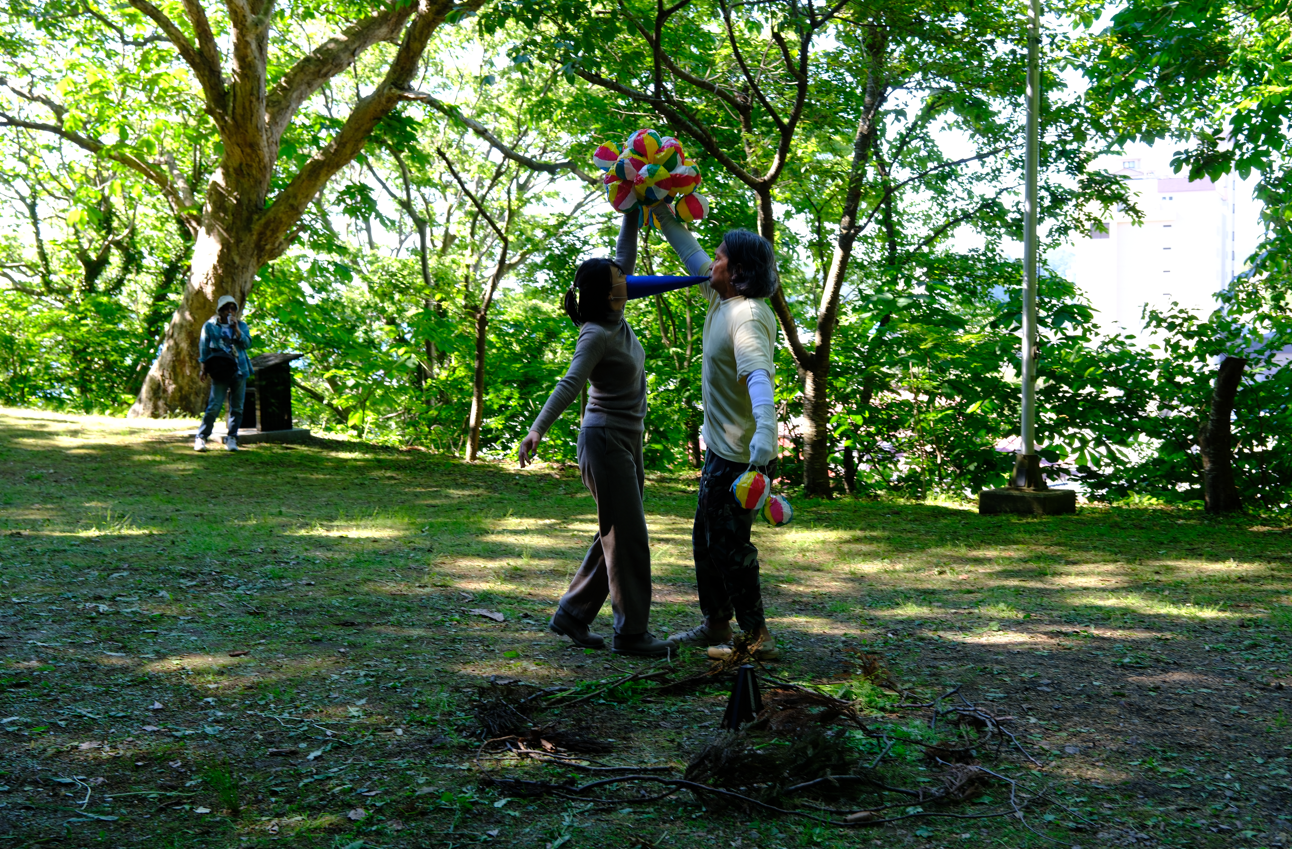
Dressed in a dozen paper balls, Justin evoked a childlike openness to the world, recalling a time before rules and expectations took hold, when our greatest ability was simply to play. Ajay responded to the spiritual landscapes of Asamushi, where trees, mountains and the coastline seem suspended between history and myth. Jihyoung’s performance was deeply personal, and moving. I found myself resonating with its oscillation between reconciling with the past and accepting the present.

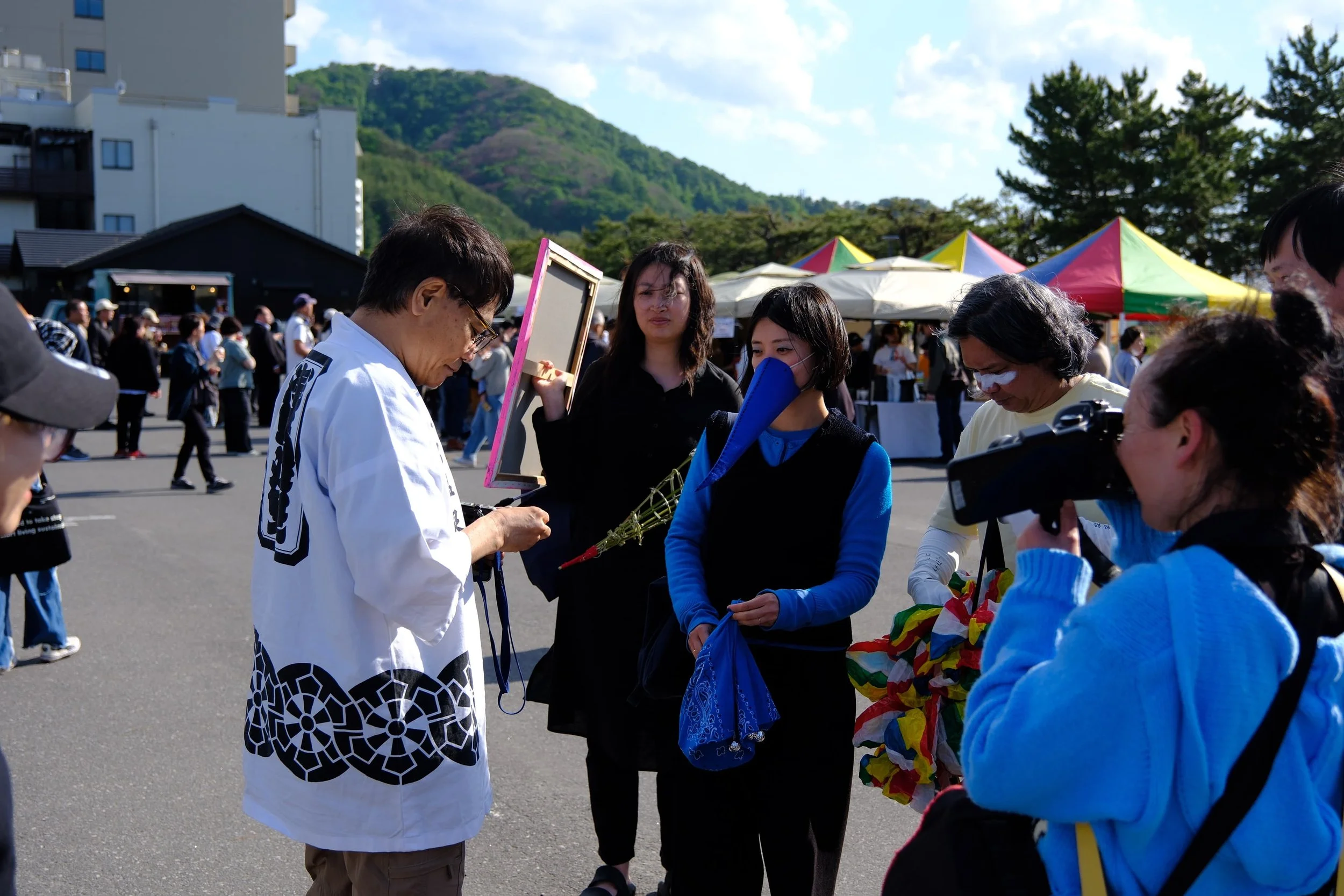
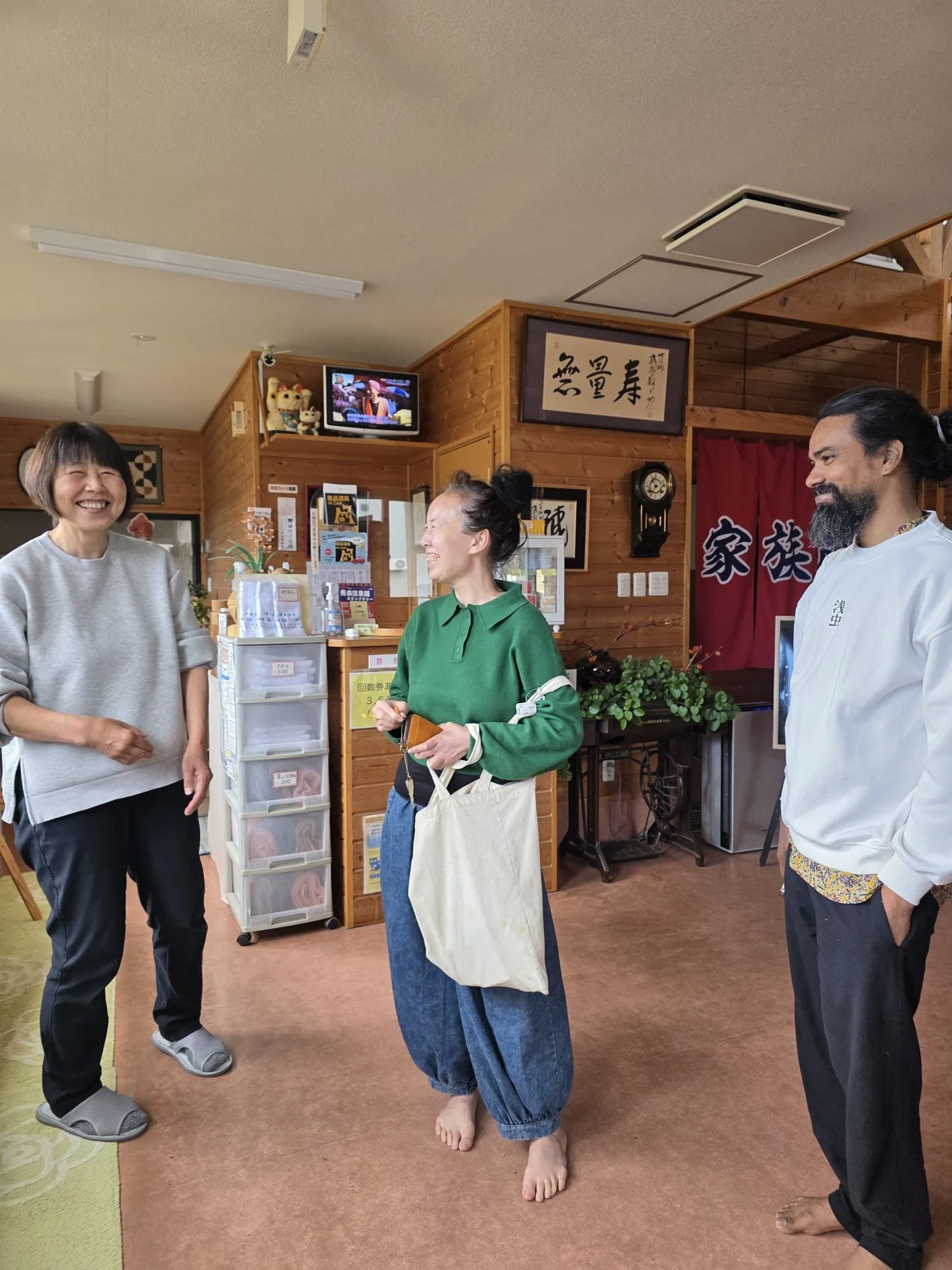
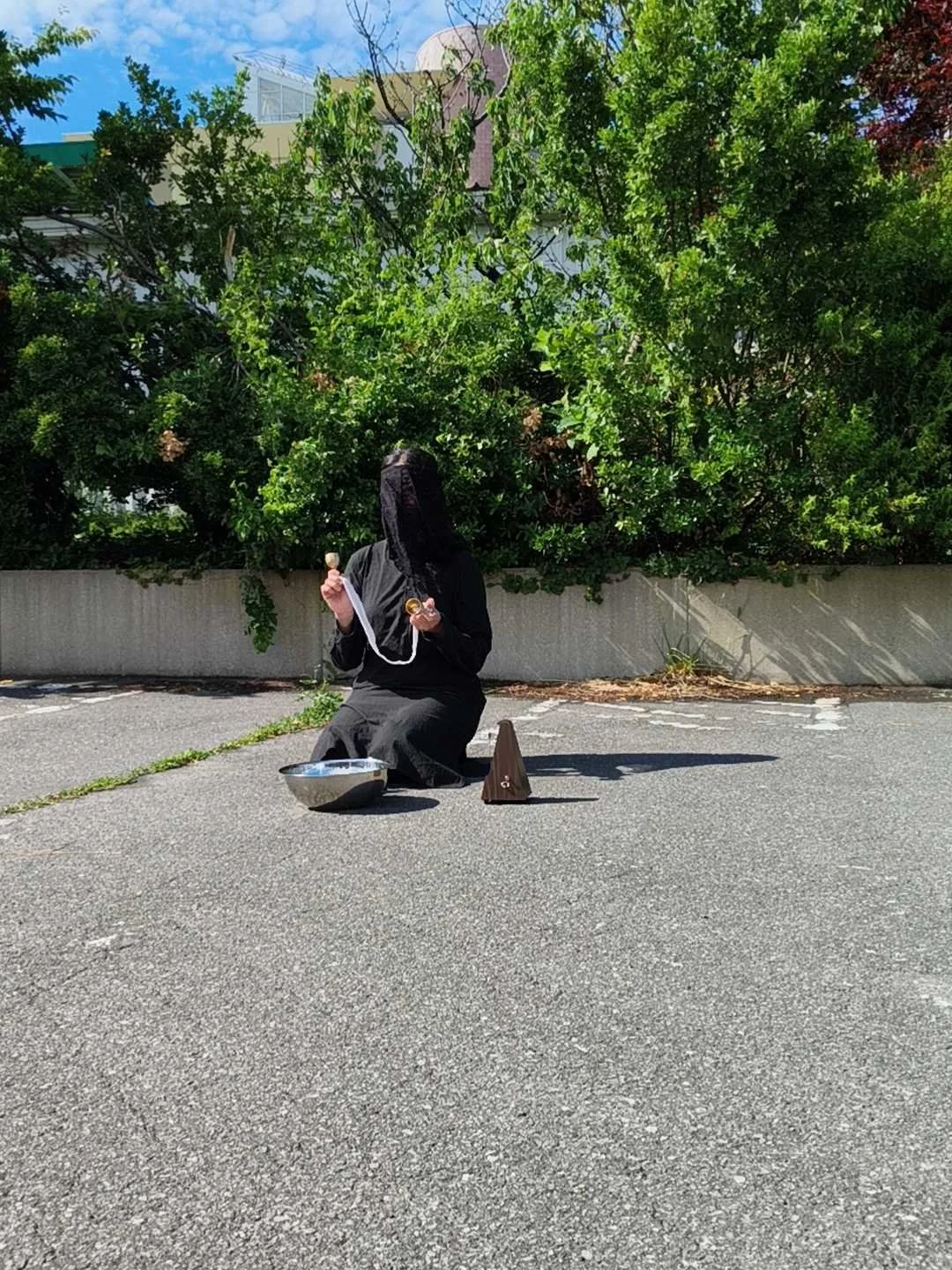
Our first performance took place at the @Asamushi_CoffeeFes by the sea overlooking Yunoshima Island (湯ノ島). The wind became an unexpected collaborator, continually disrupting and redirecting my movements. Many of the pauses and moments of stillness were unintentional. It was here that I began to understand how performance art is often as much about gathering people as it is about the individual act. The experience brought me full circle. Nearly a decade ago, I wrote about the emergence of collective performance art in Singapore and the ways it fostered temporary communities. At Asamushi, I found myself no longer observing from the periphery but participating in one.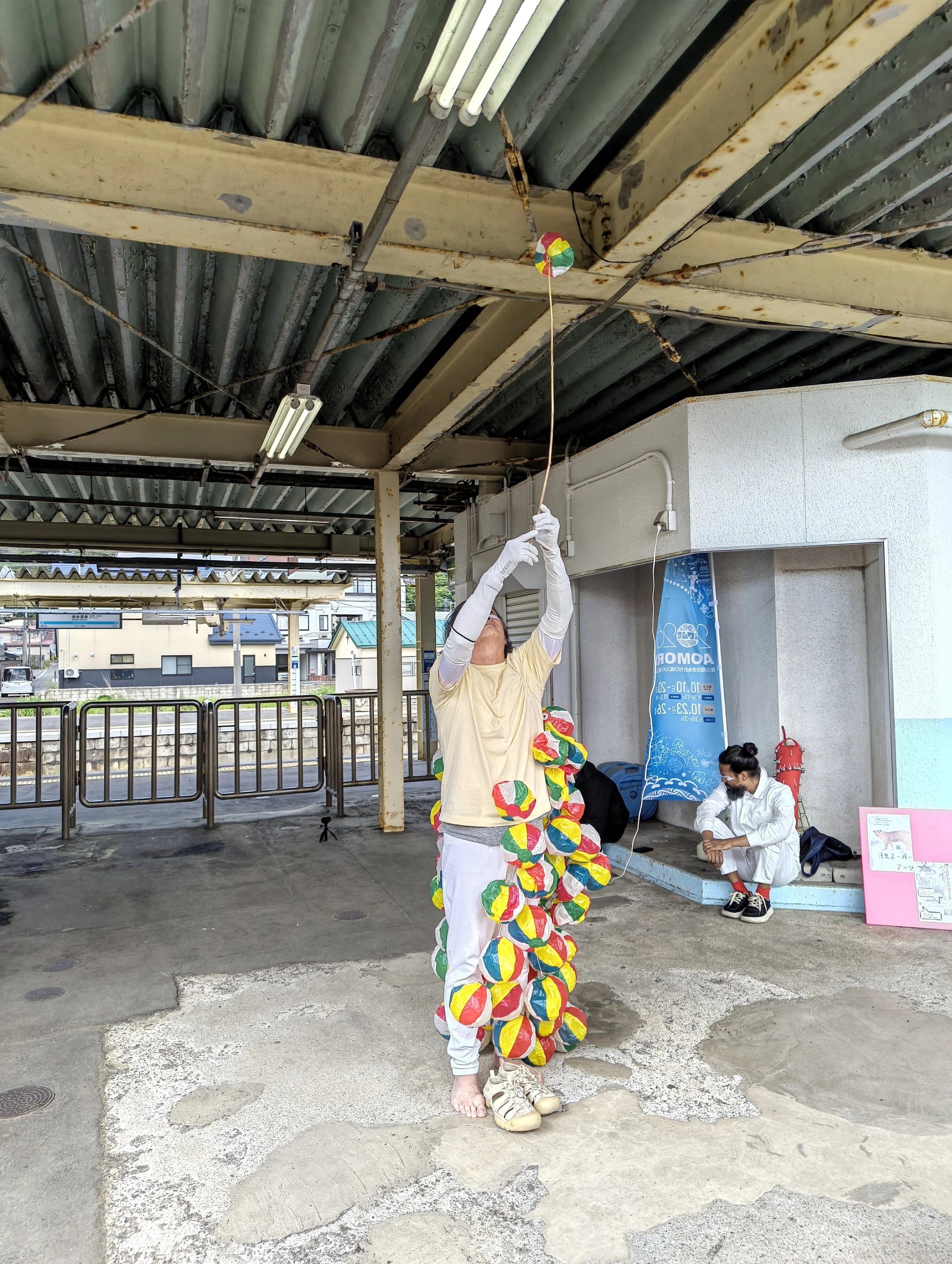
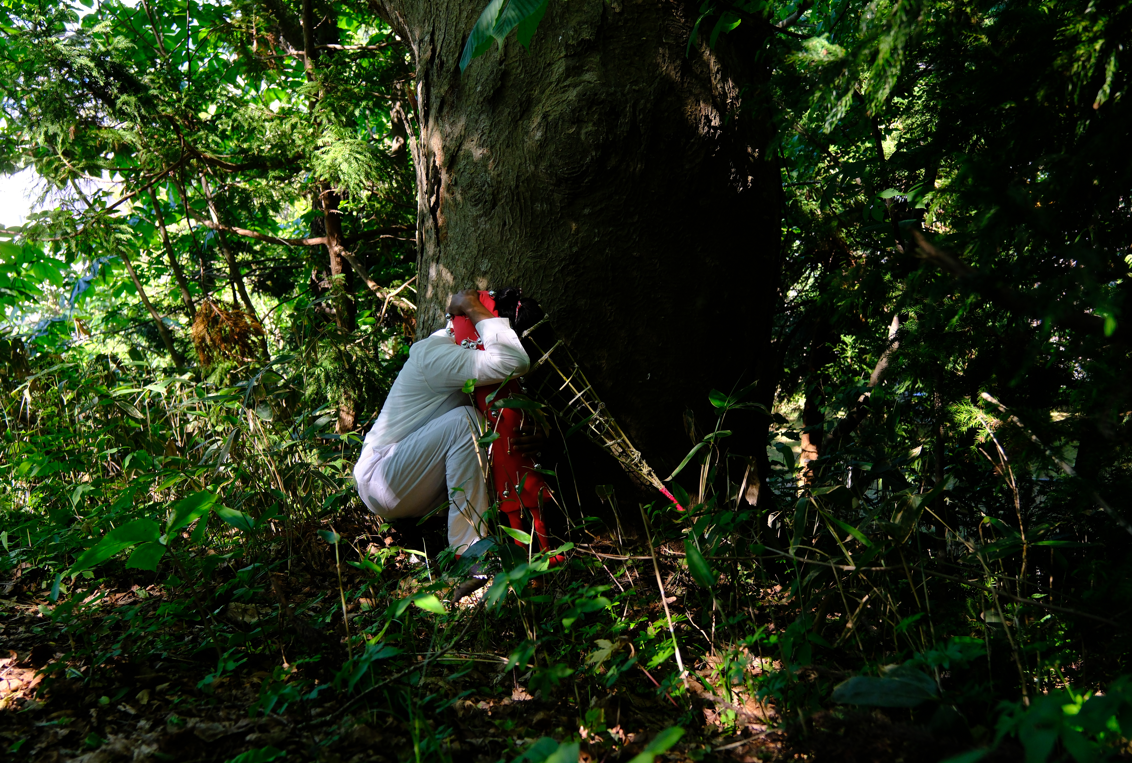
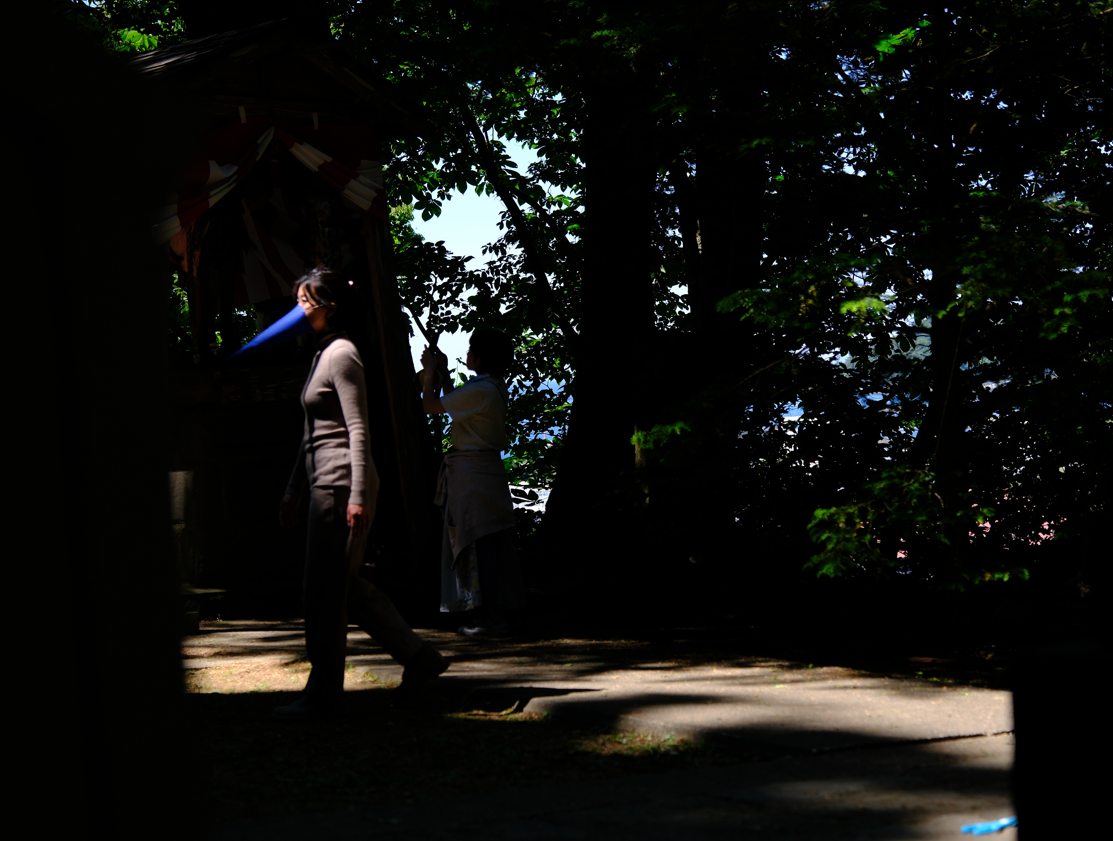
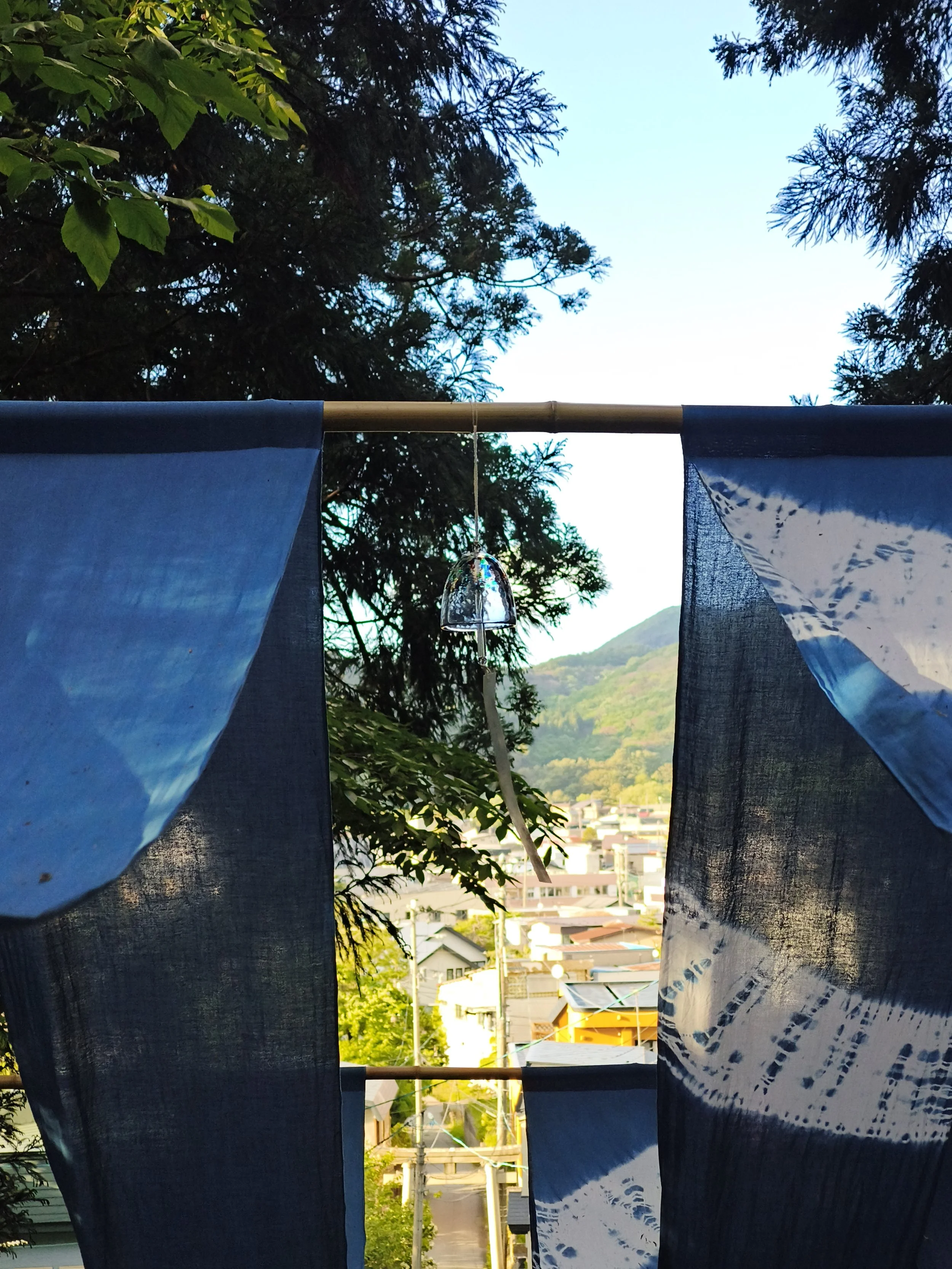
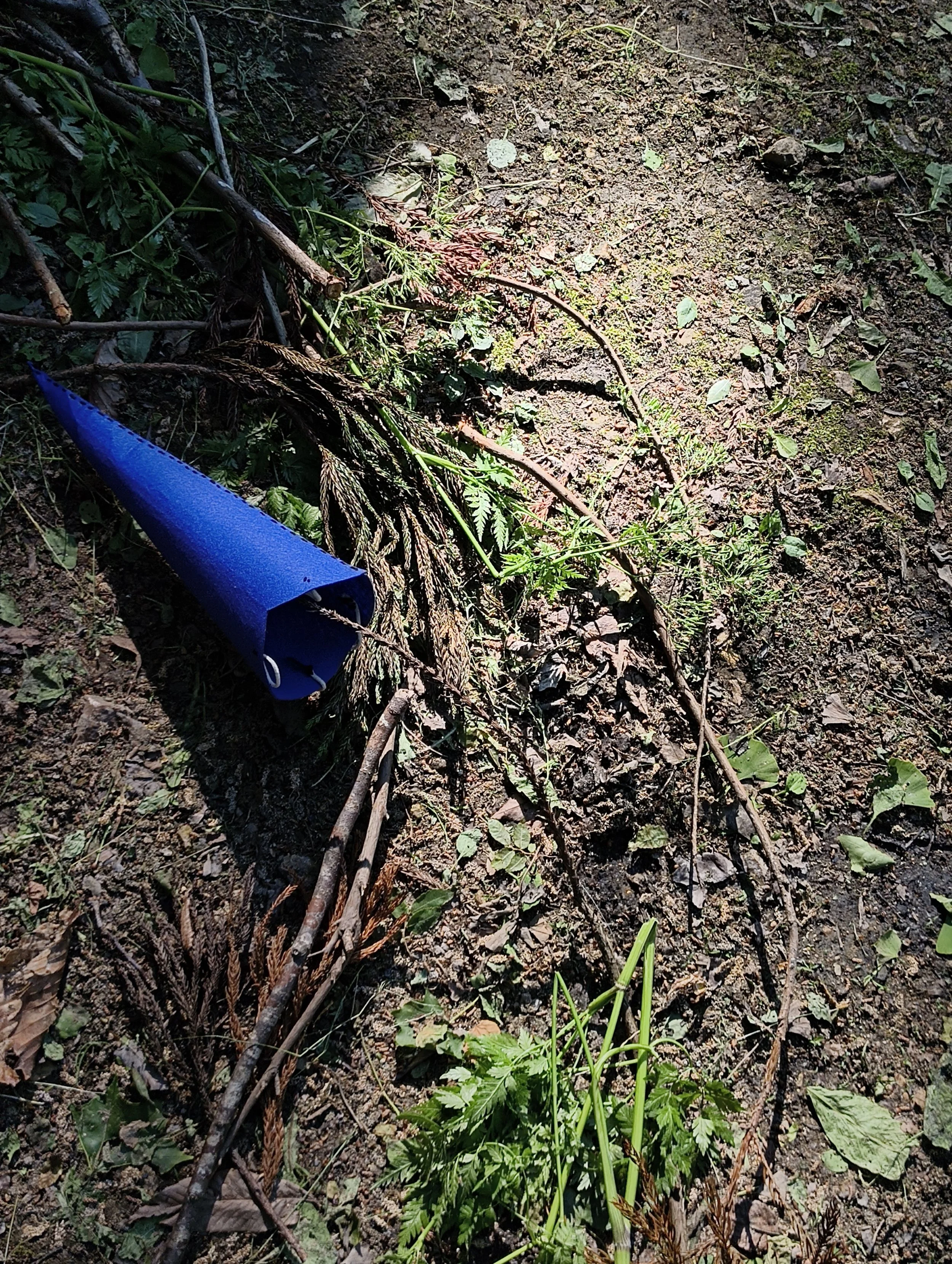
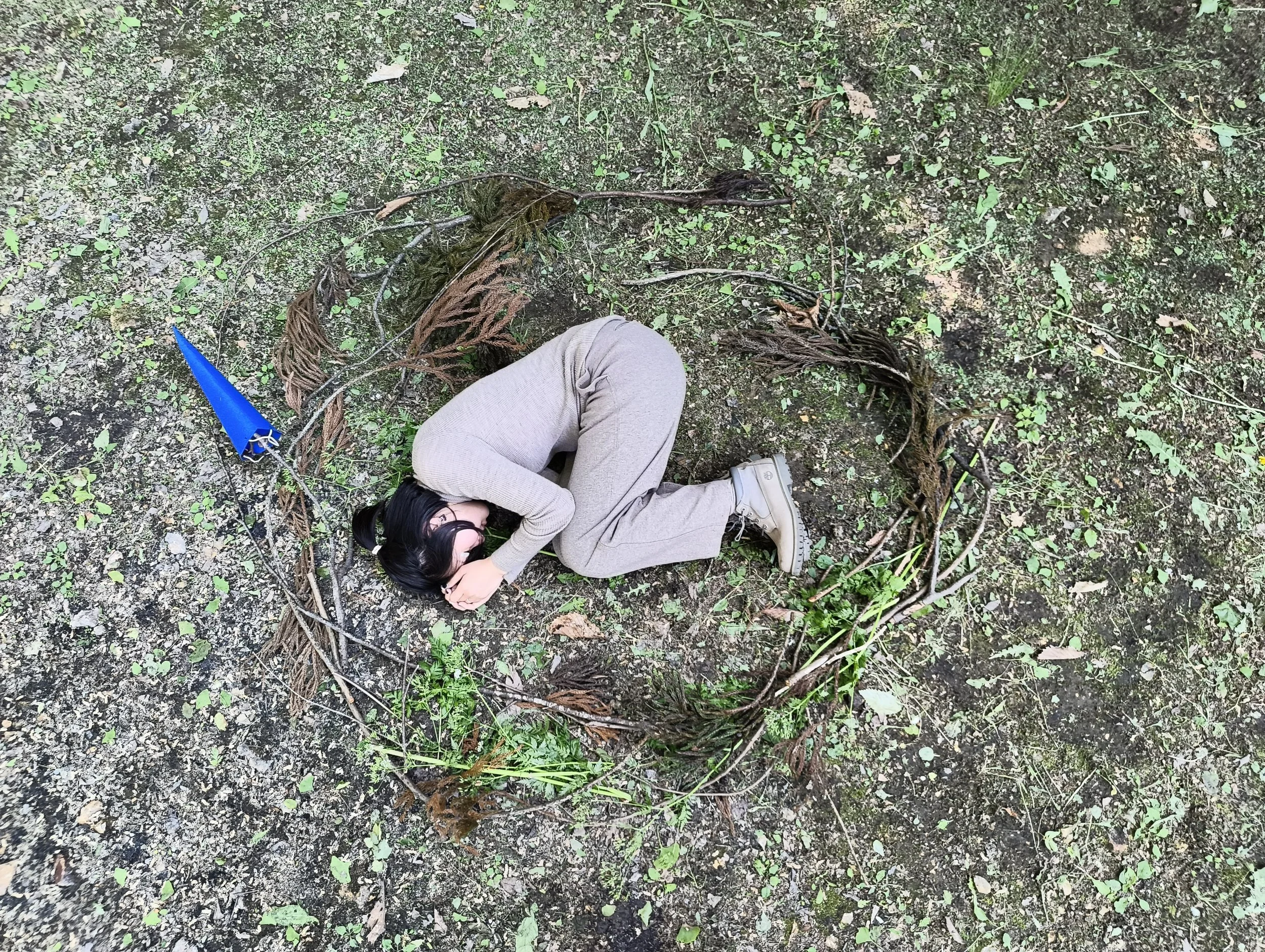
The second performance unfolded at Asamushi Hachimangu, a a seven-hundred-year-old shrine on a hill. Indigo-dyed cloths and glass bells marked the entrance. I arrived with only a loose score in mind: I would forage for branches, moss and fallen leaves to build a nest. I did not know how the performance would end. What I imagined as an act of searching gradually became one of dwelling. As the nest slowly took shape, Lee Wen’s question returned to me. It was, after all, an invitation to keep looking, listening, and trusting that the bluebird might appear when least expected.

I removed the blue beak and hung it by the nest. I lowered myself into the structure I had built and rested there. I was still.
My heart found its home.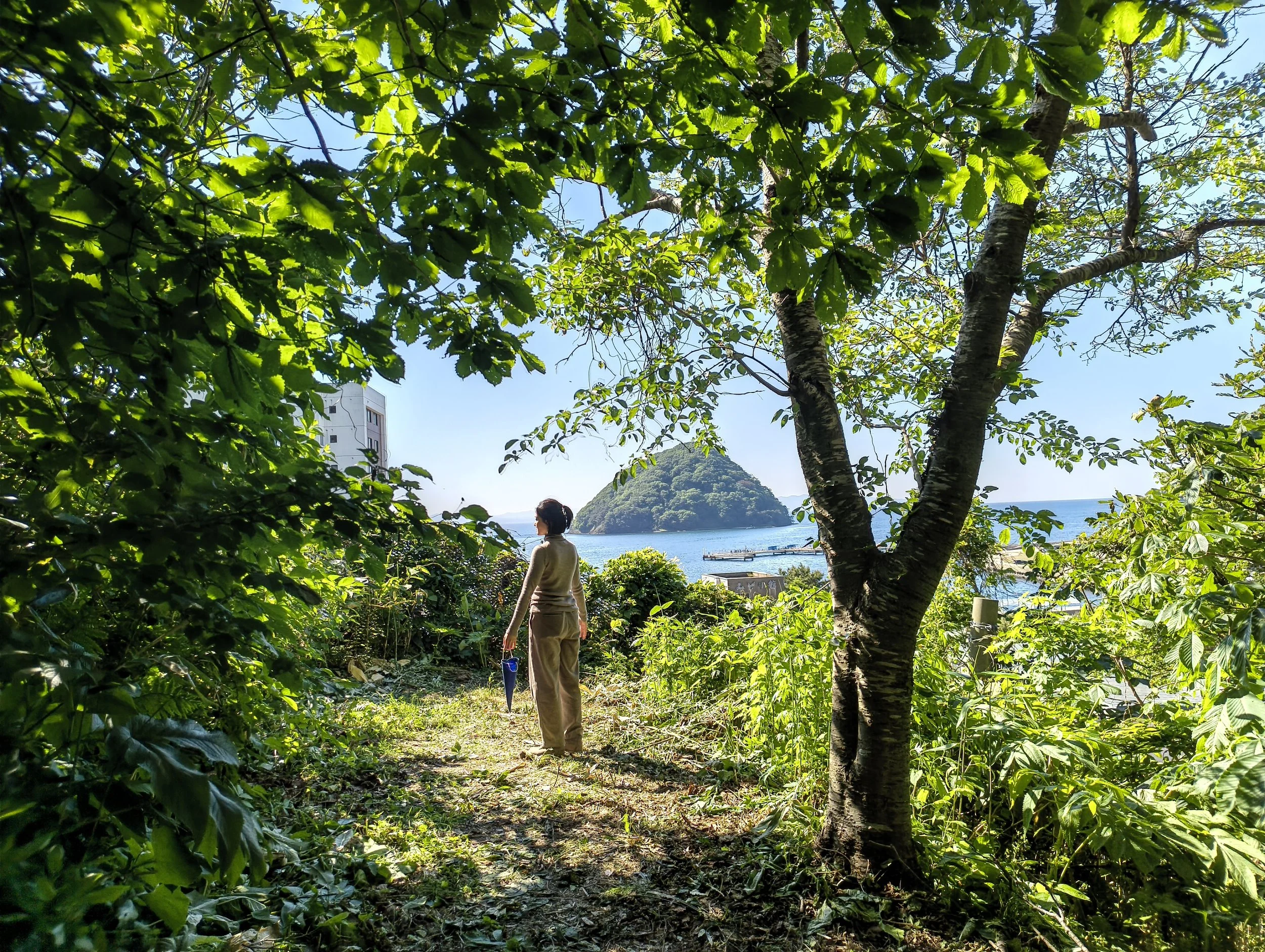
吹きあれる
嵐の風の
木の葉に
道埋るまで
雪はふりつむ
- Poem from an omikuji fortune

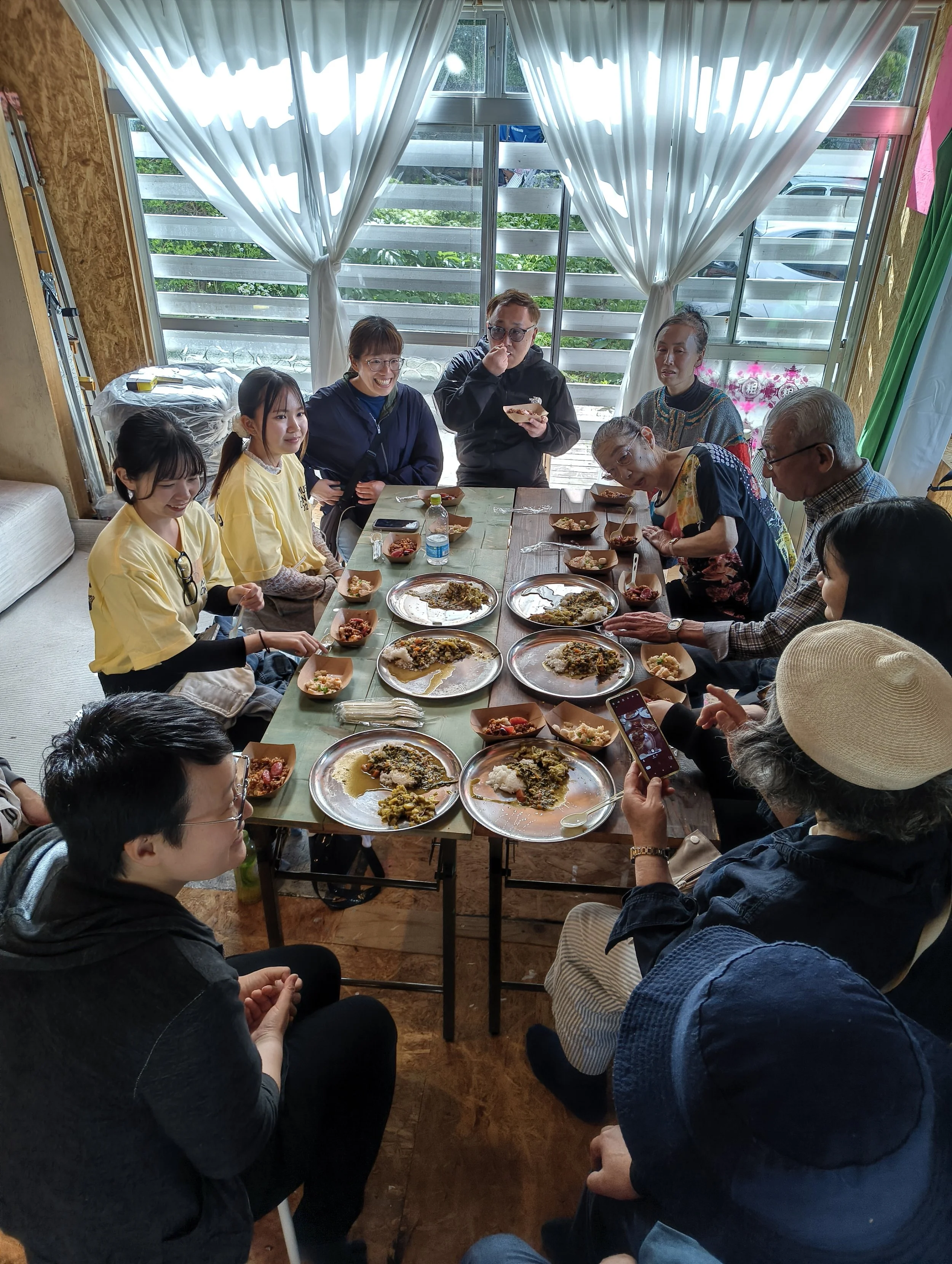
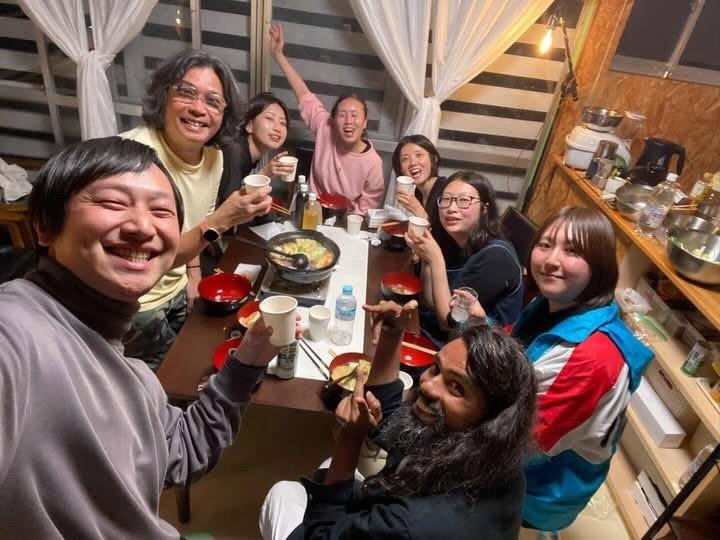
By the end, I felt exhilarated by the act of performing and by the opportunity to share the joy of this art form and alongside like-minded artists. The spontaneous session at the end that followed remains one of my fondest memories of the festival. Special thanks to Justin Lee, whose encouragement and friendship made this journey possible. To Yuzuru Maeda, who worked tirelessly to realise the festival and hosted us with extraordinary warmth. To Ajay and Jihyoung for the wonderful company, conversations and meals. And to Ayuko, Dai, Momomi, Riho, and everyone who travelled near and far to spend time with us, thank you for welcoming us into your community.  Of course, to Lee Wen, who brought us together across time and place.

For more or to watch the performance, visit here